
Water Damage Restoration
Servicing Northern Idaho and Spokane Area
24/7 Emergency Service
Why choose us?
When water damage affects your home or business, choosing the right restoration company matters. Abide Restorations provides fast, professional water damage restoration services throughout Kootenai, Spokane, Bonner, and Shoshone counties, serving communities including Coeur d’Alene, Hayden, Post Falls, Spokane, Spokane Valley, and Sandpoint. As a locally operated company, we understand regional building conditions and common water loss issues, allowing us to respond quickly and restore properties efficiently.
We offer 24/7 emergency response because water damage doesn’t wait. Our IICRC-certified technicians follow the latest industry standards and proven restoration methods to assess damage, stop further loss, and begin mitigation immediately. Using professional equipment, we remove excess water, control moisture, and thoroughly dry affected materials to help reduce secondary damage and future repair costs.
Throughout the process, we focus on clear communication and professionalism. We work alongside homeowners, businesses, and insurance providers, supplying detailed documentation and reports to support the restoration process. Our goal is to restore your property with care and efficiency—helping you return to normal as quickly as possible.

Frequently Asked Questions
What should I do first when my home has water damage?
The first step is to make sure the area is safe and stop the source of water if possible. Once that’s done, contact a professional water damage restoration company right away. The ANSI/IICRC S500 Standard emphasizes that prompt mitigation and moisture control are critical to limiting secondary damage and preventing further deterioration of building materials
Will my homeowner’s insurance cover water damage?
We work directly with you and your insurance provider to help determine coverage and streamline the restoration process. Our team provides detailed documentation, moisture readings, and reports throughout the project to support your claim and help ensure the work is completed efficiently and accurately.
How quickly does water damage get worse?
Water damage can begin spreading within hours, migrating into walls, floors, and insulation. The longer moisture remains, the greater the risk of structural damage and microbial growth.
How long does the water damage restoration process take?
Every situation is different. Drying time depends on the extent of the damage, materials affected, and how long water was present. Some projects may take only a few days, while more extensive losses can take longer.
Can water damage lead to mold growth?
Yes. When moisture is left unaddressed, conditions can support mold growth in as little as 24–48 hours. Prompt water mitigation and proper drying help reduce the risk of microbial growth and protect indoor air quality.
Do I need professional water damage restoration for a small leak?
Even small leaks can cause hidden moisture damage inside walls or flooring. A professional inspection helps ensure all affected areas are properly dried and protected from future issues.
Water damage can spread rapidly and affect far more than what is immediately visible. According to the ANSI/IICRC S500 Standard for Professional Water Damage Restoration, water can migrate into wall cavities, flooring systems, insulation, and structural materials, where trapped moisture may continue causing damage long after the initial event. As materials absorb moisture, they can swell, warp, weaken, or deteriorate, leading to compromised structural integrity and costly repairs if not properly addressed. Even small leaks can result in significant hidden damage over time.
Beyond structural concerns, prolonged moisture creates conditions that support microbial growth, which can negatively impact indoor air quality and occupant comfort. Elevated humidity and damp materials increase the risk of mold amplification and unpleasant odors, especially when drying is delayed or incomplete. Proper water mitigation and controlled drying help reduce these risks by stabilizing the environment, limiting secondary damage, and restoring materials to acceptable moisture levels. Prompt professional restoration is key to protecting both the building and the health of those who live or work inside it.
Effects of Water Damage
Our Process
24/7 Emergency Response
Water damage can happen at any time. Our team is available 24/7 for emergency water mitigation, providing fast local response to help limit damage and protect your property.Inspection & Assessment
We perform a detailed inspection using professional moisture detection equipment to identify affected areas, determine the extent of water intrusion, and document conditions before restoration begins.Water Removal & Mitigation
Standing and excess water are promptly removed to help reduce further damage and reduce moisture migration into building materials.Controlled Drying & Dehumidification
Professional drying equipment is used to control humidity, airflow, and temperature, allowing moisture trapped in walls, floors, and structural materials to dry efficiently.Monitoring & Documentation
Moisture levels and environmental conditions are monitored and documented throughout the process to ensure drying goals are met and materials return to acceptable moisture levels.Final Inspection & Preparation for Repairs
Once drying is complete, a final inspection is performed to verify results and prepare the property for any necessary repairs or reconstruction, helping return the space to a safe, functional condition.
-
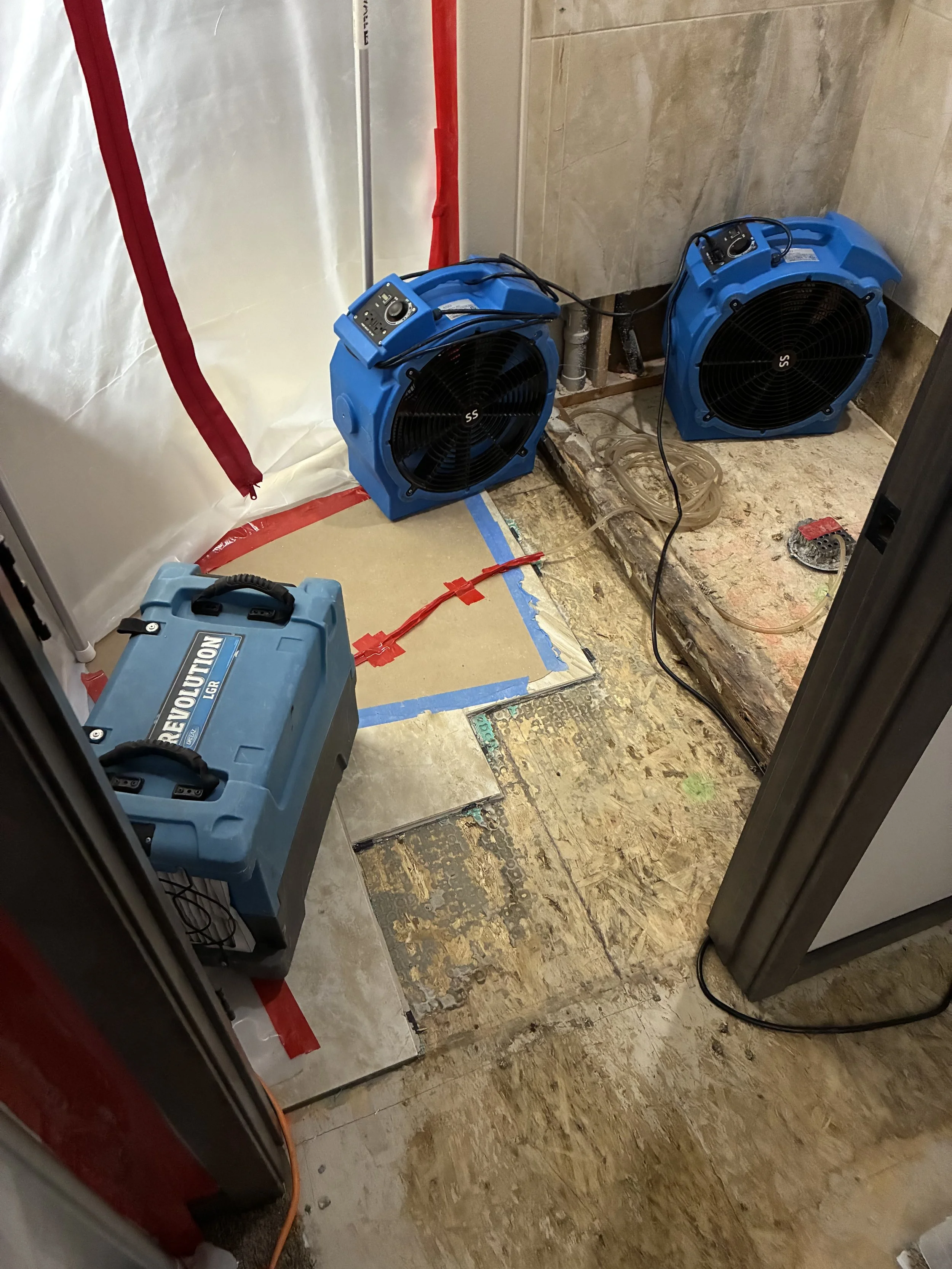
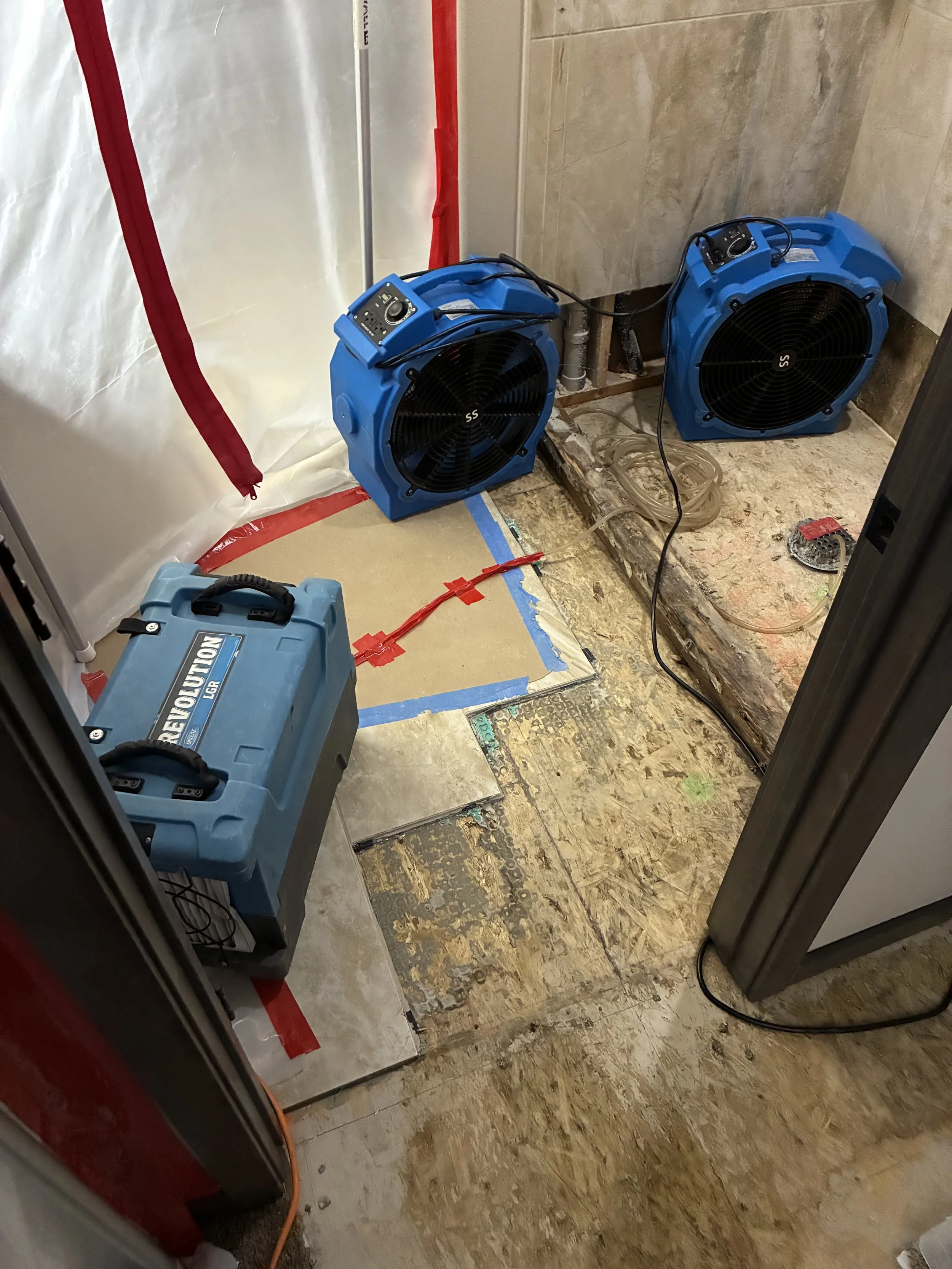
Professional structural drying using commercial-grade air movers and dehumidification equipment.
-
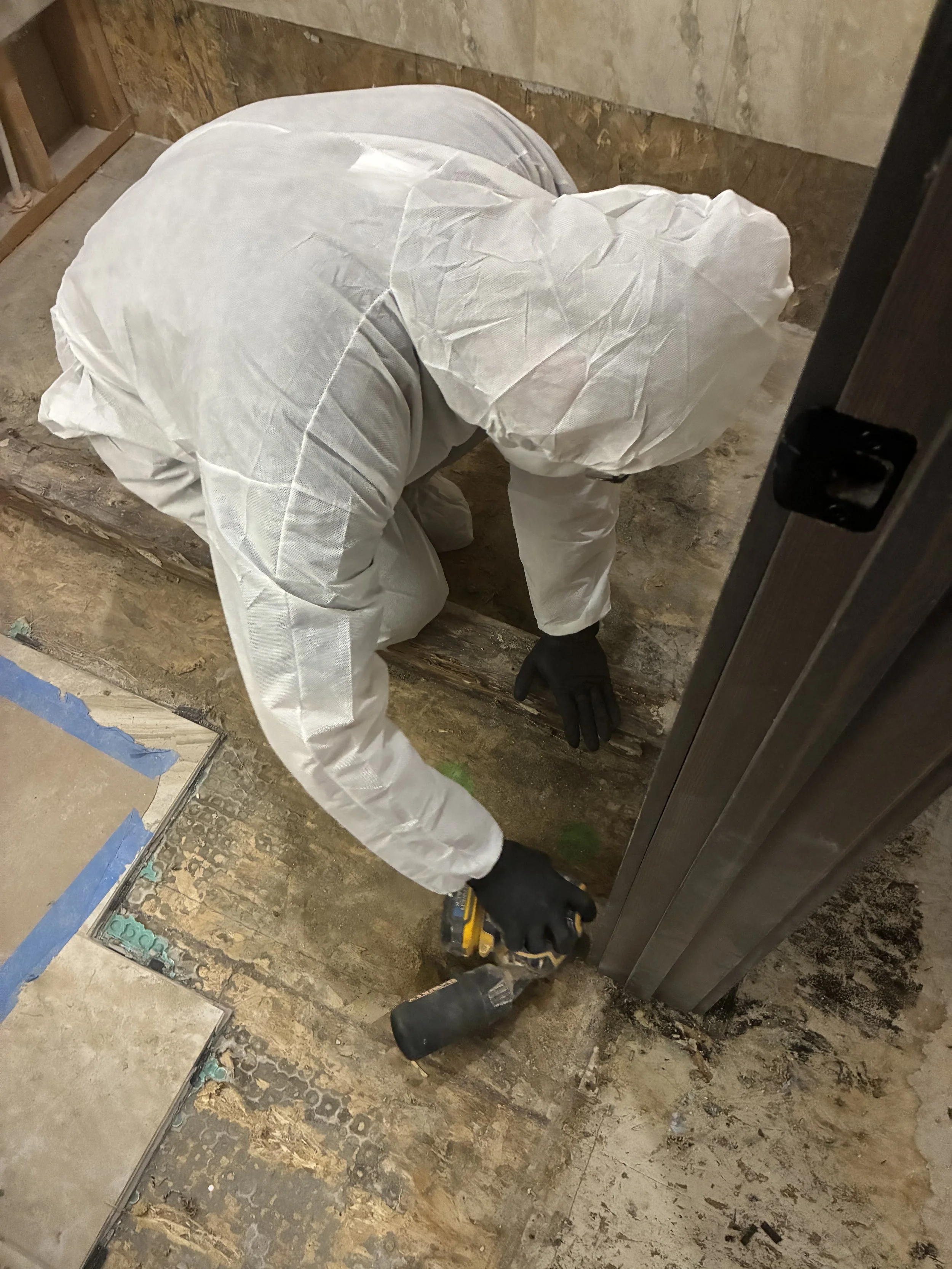
Mold removal performed on a residential subfloor following extensive water damage.
-
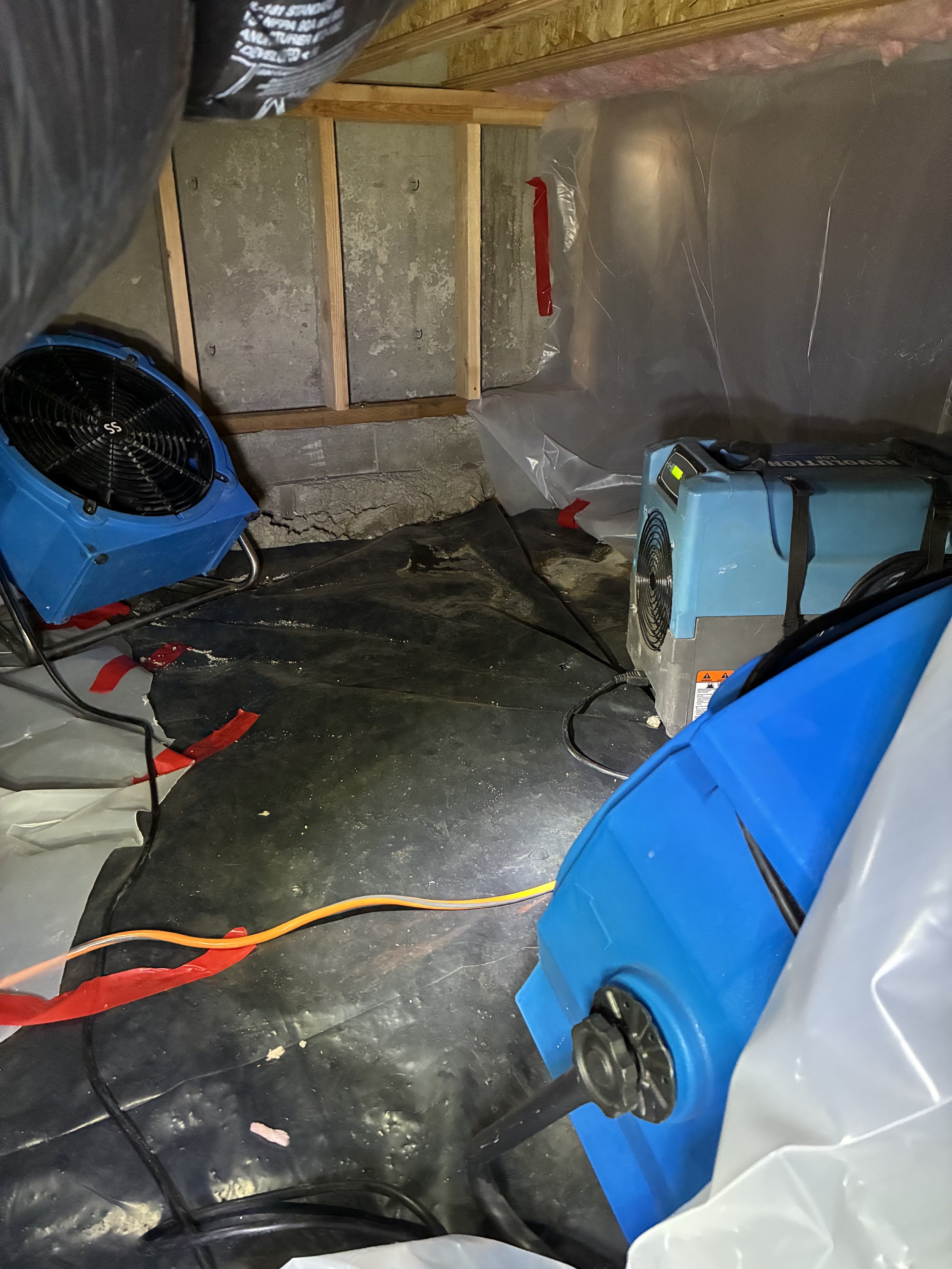
Water damage restoration equipment set up in a crawlspace for structural drying after moisture intrusion.
-
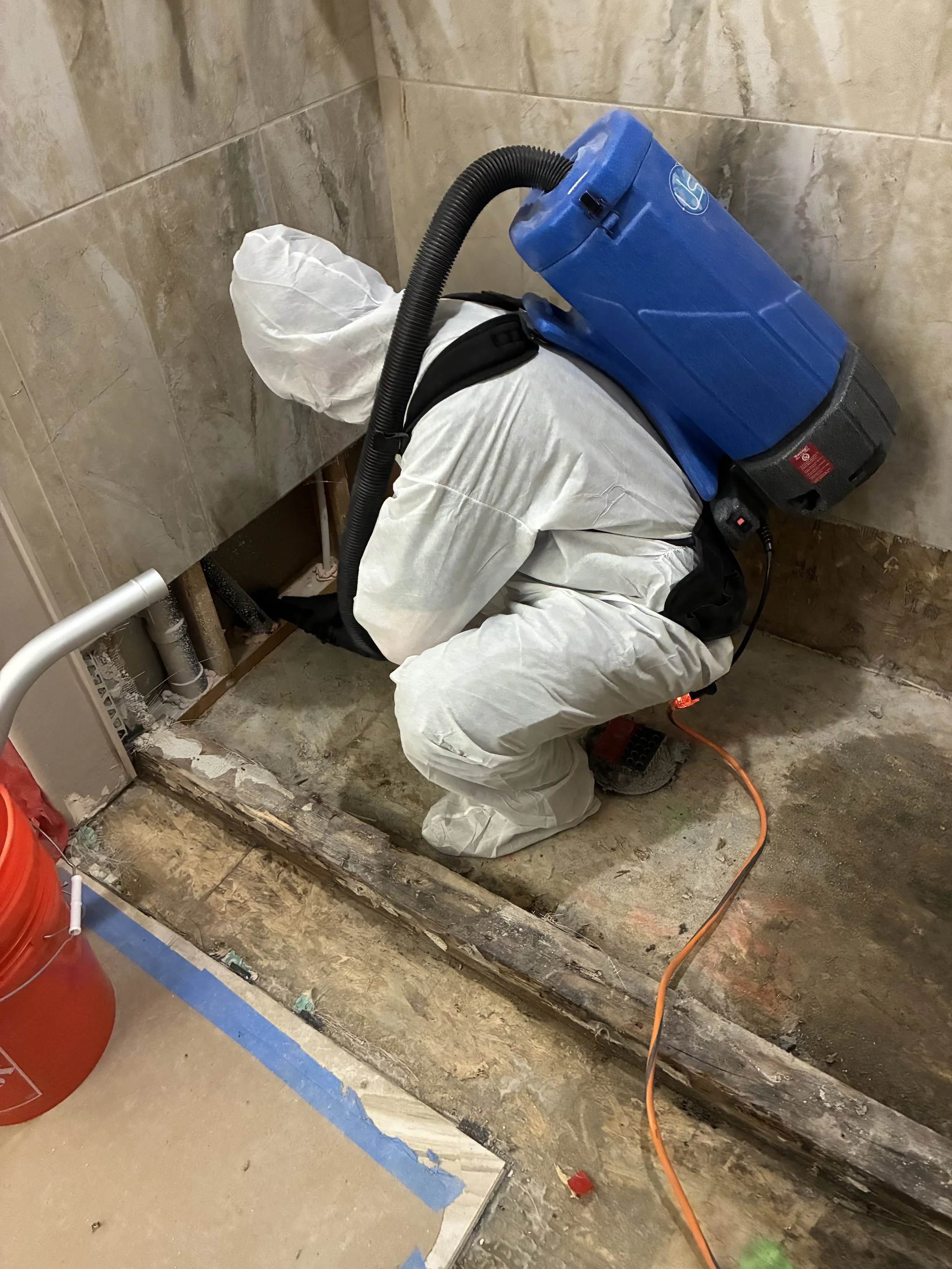
HEPA vacuuming performed after demolition and mold removal to capture fine particulate and residual debris.